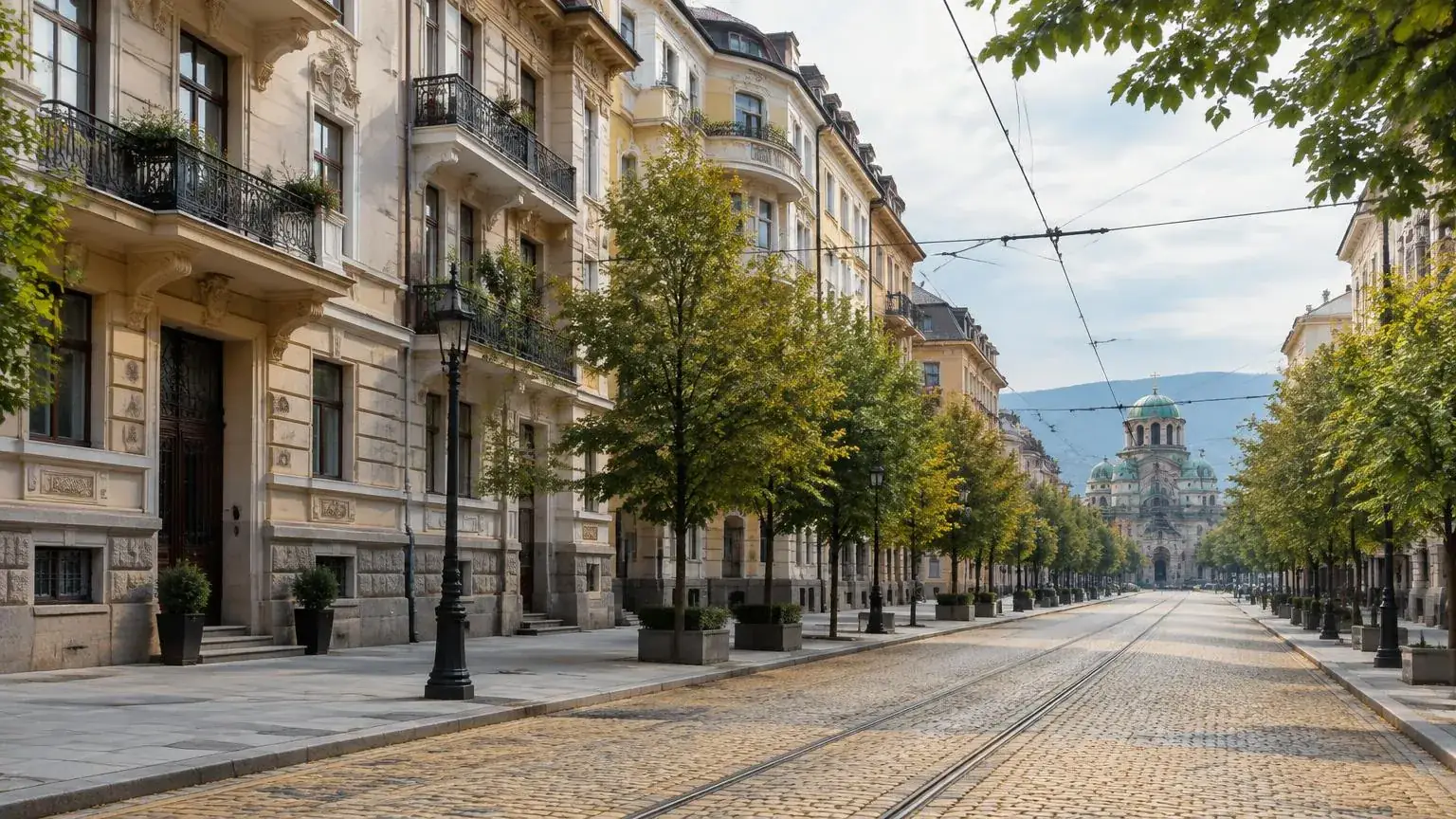
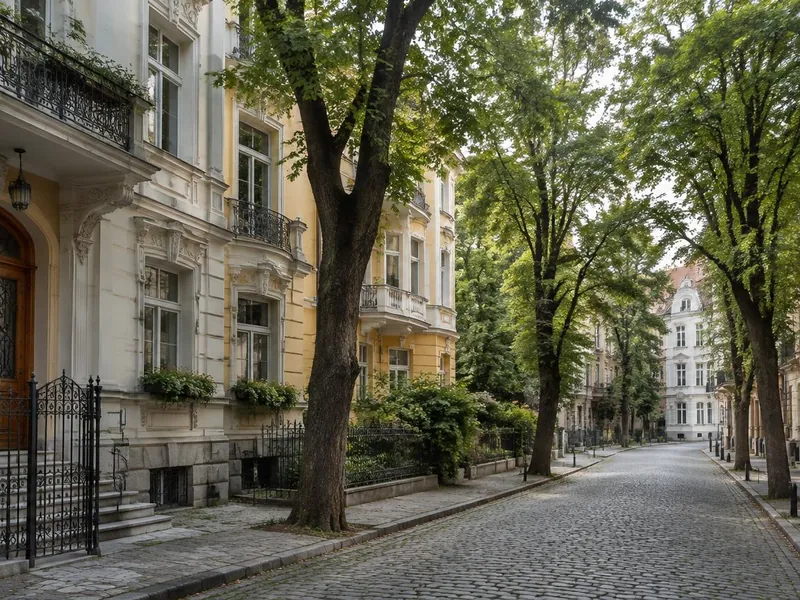
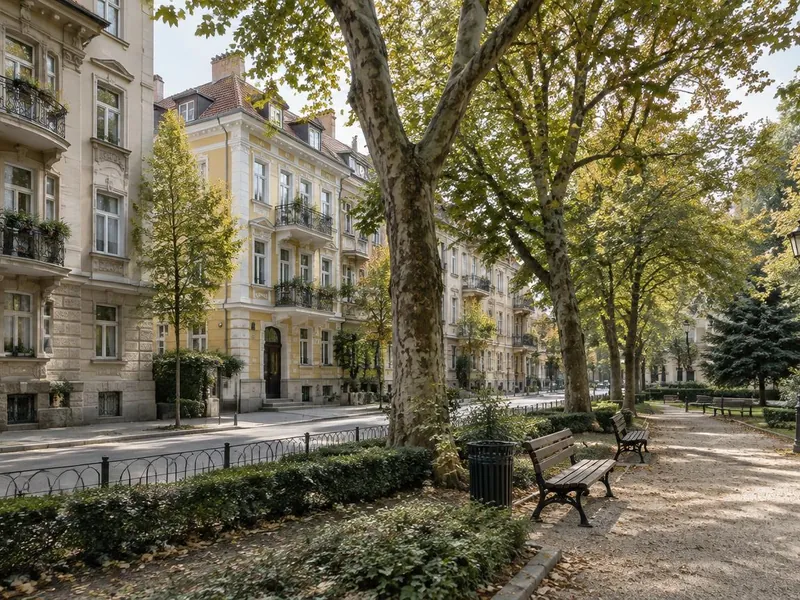
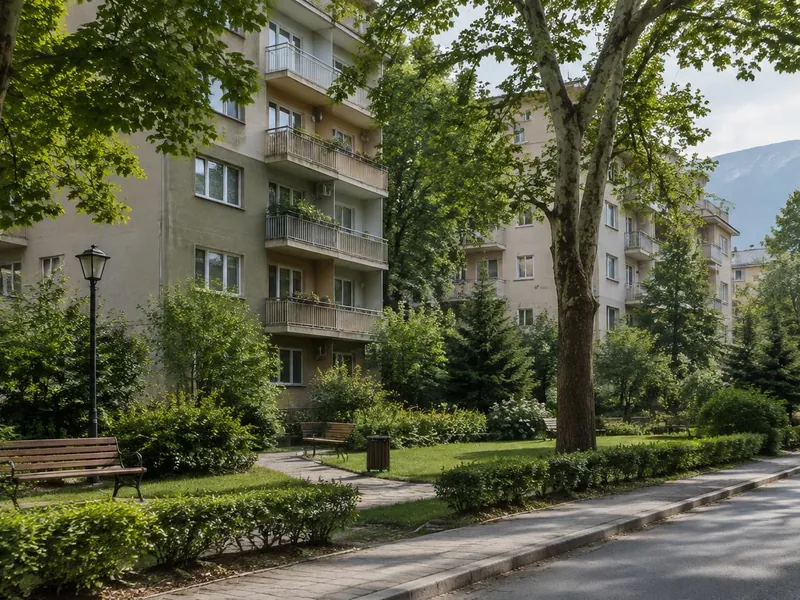
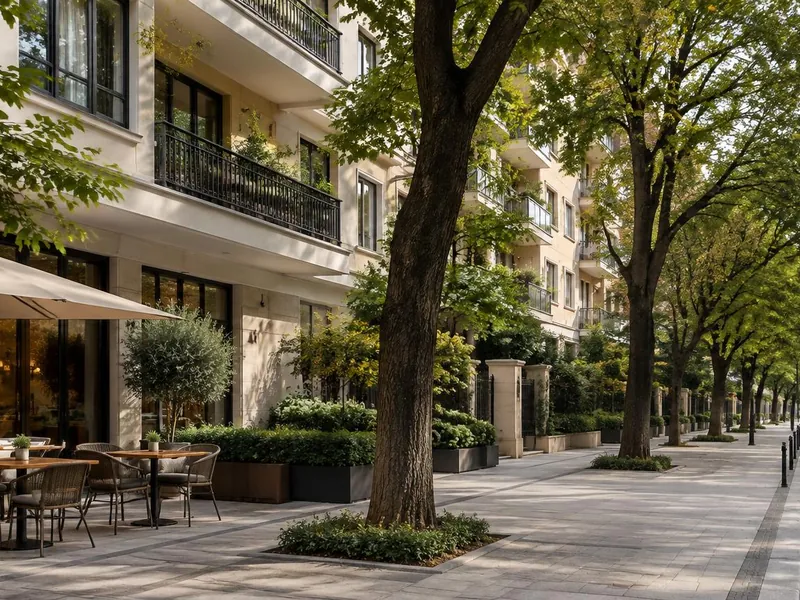
Central Sofia is where the city's layers are most visible. Roman remains sit beneath and beside the main squares, late nineteenth and early twentieth century facades line the older boulevards, and socialist-era public buildings define entire blocks. Within a short walk it is possible to pass from a formal institutional quarter to a quiet street of low-rise residential buildings.
Daily life in the centre is built around walking and public transport. The metro, trams and buses converge here, and most everyday needs, from food shopping to healthcare and schooling, are available within the district itself. Vitosha Boulevard and the streets around it form the main retail and cafe spine, while City Garden and other smaller squares provide the green counterweight, with the adjacent Doctor's Garden area just beyond the district.
The residential stock is varied and often historic. Pre-war buildings with high ceilings and generous rooms sit next to mid-century blocks and occasional contemporary infill projects. Condition differs sharply between buildings: some have been carefully renovated, others retain original systems, and common areas can vary even within one street.
Living centrally also means accepting the realities of a busy district: traffic, parking pressure, evening activity around the main streets and limited outdoor space in most buildings. For people who value proximity to work, culture and transport, this is usually a reasonable exchange; for those looking for quiet and a garden, the outer districts tend to be a better fit.